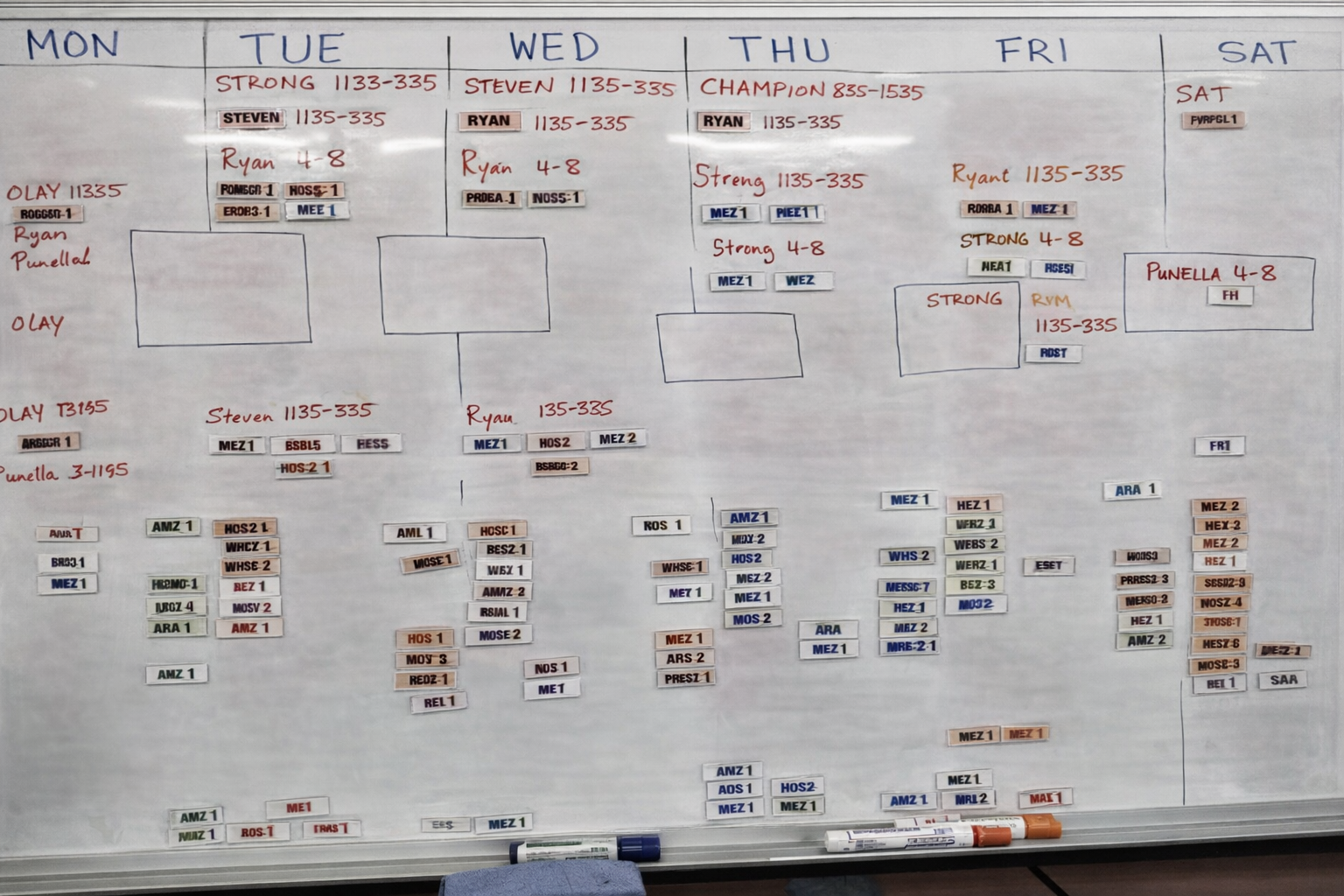
If you run a construction or engineering business, you already know the morning routine. Someone walks into the office to check the whiteboard. Someone else calls in because they forgot where they're heading today. A manager is stuck at the desk doing schedule changes instead of being out on site. And somewhere in the mix, a timesheet is missing, a leave form got lost, and a new worker still hasn't received their site induction.
This is the daily reality for thousands of small-to-medium construction and engineering firms across Australia, and it's costing them more than they realise.
The good news? Fixing your scheduling whiteboard doesn't have to mean a six-month software rollout or a hefty IT budget. In fact, when you replace your whiteboard with the right digital solution, you can fix your onboarding, timesheets, and leave management all in the same move.
Here's how.
Why the Whiteboard Still Exists and Why It's Holding You Back
There's a reason the scheduling whiteboard has survived this long. It's visual. It's immediate. Everyone in the office can see it at once. For a small crew, it works fine.
But as your business grows, more staff, more sites, more moving parts, the whiteboard starts to break down. A study referenced by Schedule It found that manual scheduling systems create significant bottlenecks because access to information is physically restricted to one location. Workers have to come to the office just to find out where they're going.
This isn't a small inconvenience. According to research from Axiol, businesses that cling to manual processes face compounding inefficiencies, from data entry errors through to poor communication chains that slow decision-making across the whole business.
In construction and engineering specifically, the stakes are high. The Access Group identifies workforce management as one of the biggest ongoing challenges in the Australian construction industry, noting that labour shortages, scheduling complexity across multiple sites, and the administrative burden on site managers are all major contributors to project delays and cost overruns.
And when your schedule lives on a whiteboard, every change requires someone to physically update it and then communicate that change separately to every affected person. Phone calls. Text messages. Missed calls. After-hours notifications. It adds up fast.
The Real Cost of Manual Workforce Processes
Most construction business owners know manual processes are inefficient. What they often don't realise is just how much it's costing them.
Research from Kwant.ai on automated workforce management in construction highlights that manual processes create hidden costs that rarely appear as a single line item in the budget, but accumulate steadily through administrative overload, inaccurate labour data, compliance gaps, and limited visibility across teams and sites.
On the timesheet side, Toggl Track's research on timesheet automation found that manual timesheets are prone to human error and bias, generate inaccurate data that distorts reporting and budgeting, and result in billing disputes that damage both profitability and client trust. When an employee fills in their hours from memory at the end of the week, they're guessing, and those guesses compound.
For a construction firm with a crew of 20, even 15 minutes of timesheet error per person per week adds up to five hours of lost or inaccurate data every single week. Multiply that across a year, and it's a significant drag on your bottom line.
Leave management is just as problematic. When leave is tracked on paper or through verbal requests, scheduling conflicts are inevitable. A worker takes a day off and nobody updated the site roster. Another team member's annual leave overlaps with a critical deadline. And when records are scattered across emails, notebooks, and memory, it becomes harder to demonstrate that leave has been recorded and approved consistently (including under Fair Work-related record-keeping expectations where applicable).
Onboarding: The Hidden Bottleneck No One Talks About
Onboarding is often treated as a one-off event, get the worker through induction, hand them a form, send them to site. But in construction and engineering, poor onboarding has real consequences.
Kwant.ai's research notes that traditional onboarding often involves paperwork, in-person document checks, and manual data entry, which slows mobilisation and increases the risk of errors. In an industry where certifications, licences, and site-specific safety requirements are non-negotiable, a worker who hasn't been properly onboarded is a liability, both legally and operationally.
When onboarding is managed manually, it creates delays getting crews to site, gaps in certification tracking, and increased risk of non-compliance with workplace health and safety regulations. In a tight-margin industry like construction, those delays are money walking out the door.
Digital onboarding changes this. When a new worker is set up in a centralised system, their profile, certifications, contact details, work allocations, is available from day one. Managers can see at a glance who is cleared for which sites, who is due for a refresher course, and who needs additional documentation. No chasing. No filing cabinet hunts.
What Replacing the Whiteboard Actually Looks Like
Replacing your whiteboard doesn't mean replacing every system your business runs on. The right workforce management tool slots into what you already do, it just makes it digital, accessible, and automatic.
Here's what a modern scheduling and workforce management system does:
Scheduling becomes a matter of a few clicks. Drag a name to a job. Add a note to a booking. Change a site allocation when a machine is delayed or the weather closes in. The update is instant and visible to everyone, without anyone needing to walk into the office or pick up the phone.
MyShyft's research on transitioning from whiteboard to digital scheduling found that businesses who make this switch report an immediate reduction in miscommunication, a drop in out-of-hours phone calls, and better visibility across the whole team. For managers, it means spending less time coordinating and more time leading.
Onboarding becomes part of the same system. New starters are added directly into the platform. Their allocations, certifications, and contact details live alongside everyone else's, and managers can see it all in one place.
Timesheets can be tracked and submitted digitally, reducing the guesswork and the paper chase. According to Toggl Track, automated timesheets provide better data quality, support accurate billing, and improve compliance, all outcomes that matter in a project-based business like construction.
Leave management becomes transparent. Requests are submitted digitally, approved in the system, and automatically reflected in the schedule. ConnectSimpli's research on cloud-based leave management systems found that real-time visibility into leave data helps managers plan resource allocation more accurately, avoid scheduling conflicts, and maintain compliance with leave entitlements, all without manual reconciliation.
A Real Example: Strzelecki Engineering
Strzelecki Engineering, a well-established construction and engineering firm based in Mirboo North, South Gippsland, Victoria, knows this story first-hand.
Founded in 2002 by Carmelo Mancarella and Paul Van de Rydt, Strzelecki Engineering built its reputation across agricultural, residential, and industrial sectors. As they grew, expanding to Mallacoota, Melbourne, and Geelong, working on major projects including the DPI Dairy Research Centre at Ellinbank and the Coles Distribution Centre in Melbourne, their old magnetic whiteboard system couldn't keep pace.
Employees had to physically visit the office to check where they were going, who they'd be working with, and what equipment to take. Schedule changes triggered a wave of phone calls, including before and after hours. Managers couldn't be where they were needed on site because they were tied to the office to manage the board.
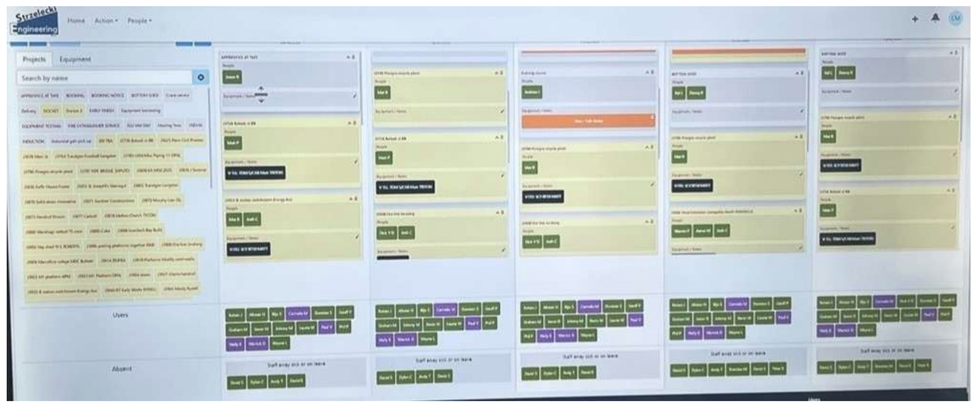
Three years ago, Strzelecki Engineering implemented Chx4-Work, a scheduling and staff management solution supplied by FinalSprint. Based on their internal feedback, the impact was noticeable early in the rollout.
"We had a manual approach to scheduling and staff management that couldn't cope with our growth," said Diana Mancarella at Strzelecki Engineering. "The Chx4-Work solution provided by FinalSprint has proven to be a solution that was easy to set up and use. Our team loves it. It has significantly improved the efficiency and productivity of Strzelecki Engineering."
Today, schedule changes happen in a few clicks. Every team member can access their allocations remotely. Notes attached to bookings have replaced the back-and-forth text messages. And the system handles training days, equipment servicing, public holidays, and staff absences, all in one place.